
Wisdom Teeth Removal Sioux Falls SD | Impacted Third Molars | River Ridge
Providing a safe, comfortable, and proactive approach to third molar extractions for teens and young adults.
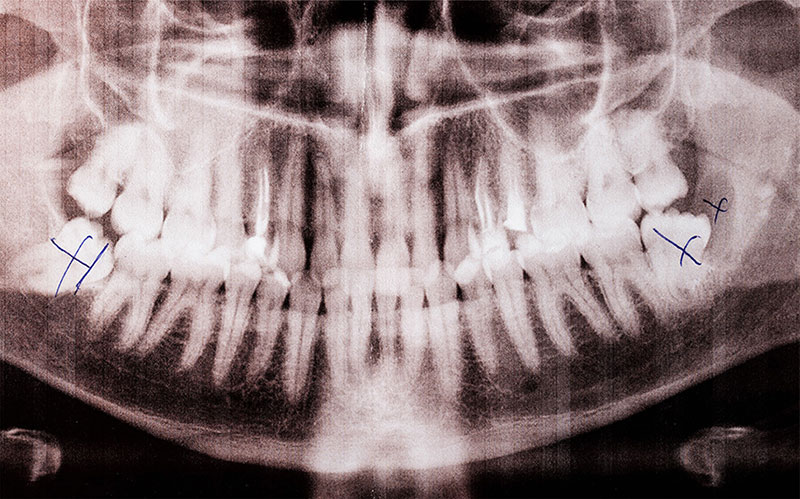
Wisdom teeth, or third molars, are the last teeth to develop. Because most jaws are too small to accommodate them, they often become “impacted,” meaning they are unable to erupt into a functional position.
At River Ridge Oral & Maxillofacial Surgical Center, we specialize in the proactive removal of wisdom teeth. Our board-certified surgeons—Dr. Brent J. Henriksen, Dr. Trevor B. Holleman, and Dr. Etezadi—recommend early evaluation, typically in the mid-teenage years. Removing wisdom teeth before the roots are fully formed leads to shorter procedure times, fewer complications, and a much faster recovery.

Why Is Removal Necessary?
While some wisdom teeth erupt without issue, most require removal to prevent long-term damage:
- Impaction: Trapped teeth can cause deep, dull aching and radiate pain toward the ear.
- Infection (Pericoronitis): Partially erupted teeth are nearly impossible to clean, leading to localized gum infections and swelling.
- Crowding: Wisdom teeth can put pressure on adjacent teeth, potentially shifting them out of alignment.
- Cysts & Bone Damage: In rare cases, fluid-filled cysts can form around impacted teeth, destroying the surrounding jawbone.
The River Ridge Experience: Safety & Comfort
We understand that for many young patients, this is their first surgical experience. We prioritize a stress-free environment:
- Advanced Sedation: Most wisdom teeth procedures are performed under IV sedation. You will be in a state of deep relaxation and will likely have no memory of the procedure itself.
- State-of-the-Art Monitoring: Our surgical suites are equipped with modern monitoring technology, and our staff of 11 fully certified maxillofacial surgical assistants is highly experienced in sedation safety.
- Virtually Painless Recovery: We utilize long-acting, non-narcotic numbing options like EXPAREL to optimize post-operative comfort.
- Efficiency: The actual extraction typically takes only 30 to 60 minutes.

Recovery: What to Expect
Our goal is to get you back to your normal routine within 3 to 5 days.
- The First 24 Hours: Focus on rest and cold compresses to manage swelling.
- Follow-Up Care: We provide a comprehensive post-operative kit, including specific Post-Op Instructions on diet and pain management.
- Expert Support: If you experience symptoms like a Dry Socket (a dull ache that begins 3–5 days after surgery), our team is ready to provide immediate care to ensure your comfort.
Wisdom Teeth Removal
Oral Examination for Extraction of Wisdom Teeth With an oral examination and x-rays of the mouth, Dr. Henriksen and Dr. Holleman can evaluate the position of the wisdom teeth and predict if there are present or future potential problems. Studies have shown that early...
FAQ
Why do oral surgeons recommend early wisdom teeth evaluation and removal?
Oral surgeons recommend evaluating and removing wisdom teeth in the mid-teenage years because the root structures are not fully developed and the jawbone is less dense, resulting in a safer procedure and a faster recovery. Waiting until your thirties, forties, or beyond introduces distinct surgical challenges:
- Prolonged Recovery: As you age, the jawbone becomes significantly denser and the tooth roots grow longer, which prolongs the post-operative healing timeline.
- Higher Complication Rates: Removing wisdom teeth later in life results in a higher and less predictable complication rate, and treating those complications becomes more difficult.
- Preventative Care: Early extraction prevents third molars from causing localized gum infections, destroying adjacent bone, or developing non-infectious diseases like cysts.
What are the specific risks and symptoms of leaving impacted wisdom teeth untreated?
Leaving impacted wisdom teeth untreated can lead to severe oral health complications, including localized infections, structural damage to adjacent healthy teeth, and the destruction of the jawbone. If there is inadequate room in the jaw for third molars to fully erupt, patients frequently experience:
- Pericoronitis: A painful, localized gum infection around partially erupted teeth that causes recurrent pain, swelling, and severe problems with chewing or swallowing.
- Cyst and Tumor Formation: Fluid-filled “balloons” can form inside the jawbone around the trapped teeth. As these cysts slowly expand, they destroy the adjacent jawbone and healthy teeth. In rare cases, delayed removal can even be associated with tumors.
- Damage to Second Molars: Because impacted teeth are nearly impossible to properly clean, the tooth directly in front of them (the second molar) is adversely affected, leading to localized gum disease, progressive bone loss, and severe decay.
- Lower Front Teeth Crowding: Retained, impacted wisdom teeth can put continuous physical pressure on the dental arch, frequently contributing to the crowding of teeth after a patient has completed orthodontic braces.
What should I expect on the day of wisdom teeth removal surgery?
On the day of your surgery, you can expect to spend approximately 90 minutes in our surgical center, with the actual extraction procedure taking only 30 to 60 minutes to complete. To ensure a smooth and safe appointment, the process follows strict protocols:
- Pre-Operative Fasting: You must have absolutely nothing to eat or drink for at least 6 hours prior to surgery. Having anything in your stomach sharply increases the risk of serious complications, including immediate nausea and vomiting.
- Sedation Administration: If you choose to be sedated, a certified surgical team member will place an IV-typically in your left arm-for safe, quick, and nearly painless delivery of your medication.
- Local Numbing: Local numbing is administered after you are sedated. This ensures you wake up entirely comfortable and have adequate time to safely travel home and rest.
- Mandatory Escort: A parent or responsible adult must accompany you to the office, remain in the lobby during the procedure, drive you home, and plan to stay with you for the remainder of the day while you are drowsy.
What are the strict dietary guidelines and restrictions after wisdom teeth surgery?
Your post-operative diet must begin strictly with clear liquids like jello and broths, entirely avoiding all dairy products, straws, and solid foods on the initial day of surgery. To promote rapid healing and prevent severe complications, you must adhere to these guidelines:
- The No-Dairy Rule: Do not consume dairy products such as yogurt, ice cream, or milkshakes on the day of surgery, as dairy combined with IV sedation and prescription pain medication frequently triggers severe nausea and vomiting.
- No Straws: Do not use a straw for the first few days after surgery. The suction force created by a straw can instantly dislodge the healing blood clot from the socket.
- Food Particle Avoidance: Avoid foods like nuts, sunflower seeds, and popcorn for several days, as these sharp particles can easily get permanently lodged inside the open socket areas.
- Maintaining Nutrition: Do not skip meals. Transition gradually to soft, nourishing foods over the next several days. Regular nutrition ensures you gain strength, experience less discomfort, and heal much faster.
What is a dry socket, what causes it, and how is it treated?
A dry socket is a painful healing complication caused by the premature loss or dissolution of the protective blood clot in an empty tooth socket, typically occurring in the lower jaw on the third to fifth day after surgery.
- Symptoms: It causes a deep, dull, continuous aching pain on the affected side that frequently begins in the middle of the night. This pain typically radiates from the jaw directly up to the ear and down toward the chin, and standard pain medication regimens may fail to control it.
- Risk Factors: Dry sockets continue to be the most common problem people experience after dental surgery, occurring with a significantly higher frequency in patients who smoke or take oral birth control pills.
- Clinical Treatment: Treatment involves an office visit where our team may place a medicated dressing directly into the empty socket. This dressing shields the exposed bone from food particles and eliminates the deep ache within 24 to 48 hours. Sockets require dressing changes every day or two for five to seven days, and they are fully removed once you have been entirely pain-free for 2 to 3 days.
What are the sensory nerve risks associated with lower wisdom teeth removal?
A primary clinical concern during lower wisdom teeth removal is the potential for temporary or permanent injury to the sensory nerve that supplies feeling to your lower lip, chin, and tongue.
- Nerve Proximity: This sensory nerve runs directly through the lower jawbone and is frequently situated very close to the roots of the lower third molars.
- The Age Advantage: Having your wisdom teeth evaluated and removed between the ages of 12 and 18 provides a massive anatomical advantage because the roots are shorter, meaning the nerve is safely separated from the root base.
- Sensation Alterations: If the nerve is irritated or injured during extraction (a risk that increases significantly in older patients), you may experience a tingling or numbing sensation in your lip, chin, or tongue once the numbing wears off. This is usually temporary and resolves gradually over a period of weeks or months, though on rare occasions, it can result in a permanent alteration of sensation.
What is a sinus communication and what precautions must be taken to prevent it?
A sinus communication is an unintended opening created between your mouth and the maxillary sinus cavity during the extraction of an upper wisdom tooth whose roots extended close to the sinus floor.
- Anatomical Risk: The upper wisdom teeth are situated directly beneath the maxillary sinuses. If the teeth are removed at an early age when root formation is minimal, this complication is highly unlikely.
- Strict Post-Op Restrictions: If a sinus communication occurs or is a high risk, it will usually close spontaneously if you protect the blood clot by creating zero pressure in the sinus area. You must avoid blowing your nose for two or three days following the surgery. You can gently wipe your nose, but you must never blow it. Additionally, if you have to sneeze, you must sneeze with an open mouth into a tissue so the pressure does not dislodge the healing blood clot.